How to Write Clear, Defensible Building Inspection Reports
Learn how to write clear, defensible building inspection reports that clients and lawyers can trust. Improve accuracy, compliance, and efficiency today.
How to Write Building Inspection Reports Clients and Lawyers Can Trust
As a building inspector, your reports are more than just paperwork. They are a professional record, a tool for clients to make decisions, and in some cases, a legal document. Yet writing clear, accurate, and defensible building inspection reports is a challenge many inspectors face. Confusing language, incomplete observations, or missing evidence can lead to disputes, misunderstandings, or even legal complications.
In this guide, we’ll walk through practical strategies to produce inspection reports that clients and lawyers can rely on, while saving time and ensuring compliance.
Why Clear, Defensible Reports Matter
Imagine a homeowner disputing a report because a roof defect was described vaguely. Or consider a lawyer reviewing your notes months after an inspection, looking for precise details. Without clarity, your credibility is at risk. Inspection report writing is not just about describing what you see; it’s about creating a record that holds up under scrutiny.
Defensible reports:
- Protect you from liability.
- Provide clear guidance to clients and stakeholders.
- Serve as evidence in legal or insurance disputes.
- Reflect professionalism and attention to detail.
The best reports combine accuracy, structure, and documentation, ensuring every observation is understandable and backed by evidence.
Start With a Strong Structure
A consistent format is the backbone of effective property inspection reports. Clients and legal professionals appreciate a logical flow that makes findings easy to navigate. Consider this structure:
- Introduction
Include the property address, inspection date, client information, and the scope of the inspection. Be concise and precise. - Executive Summary
Highlight critical findings upfront. This allows readers to quickly understand the major concerns without having to scan the entire report. - Detailed Observations
Organise by property area (roof, electrical, plumbing, etc.). For each issue, note:- Location;
- Condition;
- Severity; and
- Recommended action.
- Supporting Evidence
Include high-quality photos, diagrams, and measurements. Annotate images to show exactly what you observed. - Conclusion and Recommendations
Summarise overall property condition and provide actionable next steps. Avoid vague statements; clarity is key.
Use Objective, Precise Language
One of the most common mistakes in inspection report writing is the use of subjective or ambiguous language. Phrases like “appears old” or “looks questionable” can create confusion or legal exposure. Instead, describe:
- What you see, not what you assume.
- Measurements, quantities, and dimensions.
- Material conditions (cracked, warped, corroded, etc.) rather than impressions.
Example:
- Weak: “The roof looks like it may leak soon.”
- Strong: “The asphalt shingles in the northeast corner are cracked and lifting, creating a potential water entry point.”
Clear language reduces misinterpretation and ensures your findings are defensible.
Document Everything With Photos and Notes
A picture is worth a thousand words, but only when properly annotated. Capture:
- Problem areas from multiple angles;
- Surrounding context for each defect; and
- Evidence of maintenance or previous repairs.
Combine photos with precise notes in your report. This practice strengthens your report’s credibility and helps clients, contractors, and legal professionals understand your findings without additional clarification.
Avoid Common Reporting Pitfalls
Even experienced inspectors can fall into traps that weaken their building inspection reports. Watch out for:
- Overloading reports with unnecessary jargon.
- Omitting important defects or observations.
- Using inconsistent terminology across sections.
- Relying solely on memory instead of digital notes.
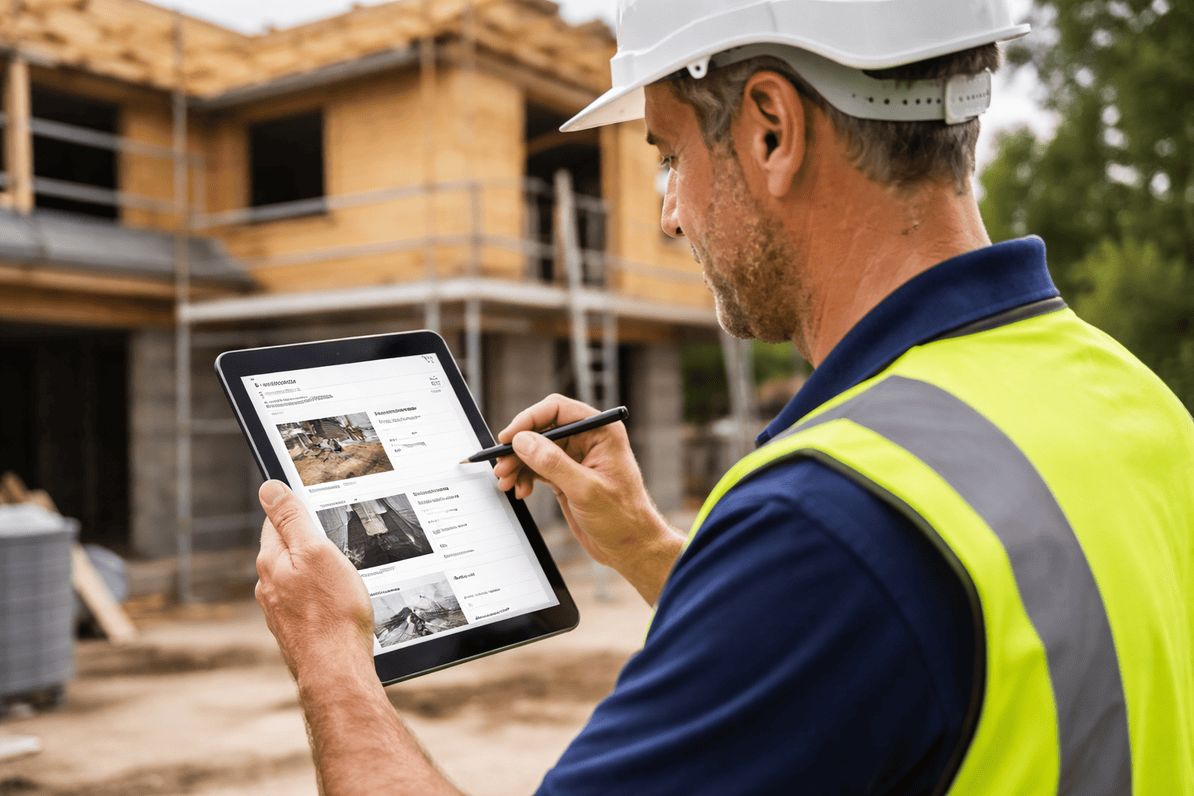
Formitize’s inspection software simplifies documentation by guiding inspectors through standard checklists, automatically linking photos to observations, and generating structured, client-ready reports instantly.
Leverage Technology for Accuracy and Efficiency
Modern inspection software is transforming the way inspectors work. Tools like Formitize help:
- Standardise report templates to maintain consistency.
- Capture and attach photos, measurements, and annotations in real time.
- Reduce manual errors and improve compliance.
- Store reports securely for legal or insurance purposes.
- Save hours of administrative work each week.
With the right tools, inspectors can focus on fieldwork while confidently producing property inspection reports that meet professional and legal standards.
Tips for Building Trust With Clients
Beyond technical accuracy, the way you present your report affects client trust:
- Keep your language professional and jargon-free.
- Highlight critical issues upfront for easy understanding.
- Include actionable recommendations.
- Offer digital copies that are easy to access and review.
When clients feel informed and confident in your findings, they are more likely to follow your recommendations and respect your professional expertise.
Conclusion
Writing clear, thorough, and defensible building inspection reports is an essential skill for every inspector. Structured reports, precise language, supporting evidence, and modern reporting tools not only protect you legally but also enhance client trust and satisfaction.
Take your inspection workflow to the next level and ensure every report is reliable, professional, and legally sound.
Start a Free Trial of Formitize today and create inspection reports that clients and lawyers can trust.